Philadelphia’s Mystical Wilderness
Cave of Kelpius: The Secret Sanctuary of America’s First Doomsday Cult
Philadelphia, Pennsylvania, United States
By the Wicked Cool Places editors · Published · Updated
Why it’s cool
This enigmatic stone chamber was the 17th-century base for a group of German mystics who predicted the imminent end of the world.
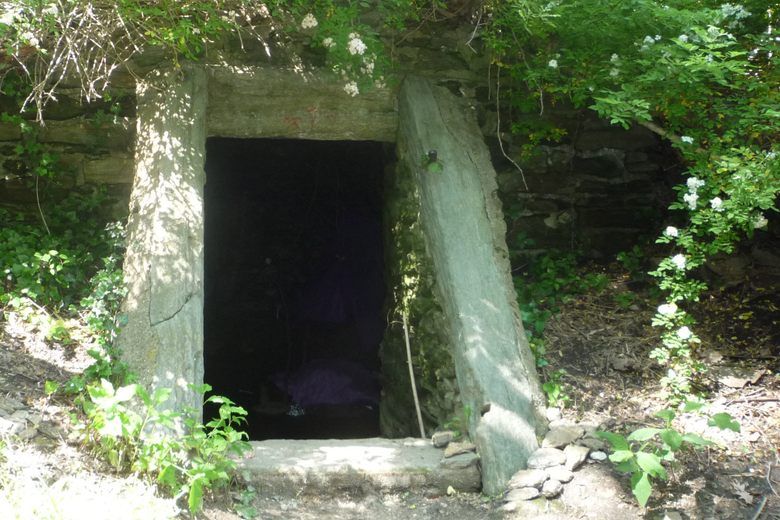
Deep within the dense canopy of Philadelphia’s Wissahickon Valley lies a stone chamber that serves as a silent witness to a 17th-century quest for salvation. In 1694, a Transylvanian scholar named Johannes Kelpius led a group of forty men into these woods, convinced that the world was on the brink of total destruction.
These German Pietists didn't just come to Pennsylvania for religious freedom; they came to wait for the literal end of days.
Why It Stands Out
The "Cave of Kelpius" is the most tangible remnant of America’s earliest organized doomsday sect. Often referred to as the Wissahickon Hermits, the group lived a life of rigorous study and isolation.
They named their collective after a passage in the Bible’s final prophetic book, envisioning themselves as the faithful seeking refuge in the wild. While they awaited the apocalypse, they didn't just pray; they were pioneers of science and art.
They constructed a large tabernacle that featured what is arguably the first astronomical observatory in the American colonies, using their telescopes to scan the heavens for signs of the Second Coming. Though the world did not end in 1694 as they predicted, the monks remained.
They became a vital part of the early Philadelphia community, serving as healers, musicians, and legal advisors. The city also features Philadelphia's Magic Gardens, another unique local landmark.
The small stone structure that remains today is the subject of historical debate. While some believe it was the actual dwelling of Kelpius, others suggest it was a simple springhouse or a storage cellar for their scientific instruments and books.
This small stone chamber shares a sense of mystery with The Ramble Cave. Its mystical status was cemented in 1961 when the Rosicrucians, who view Kelpius as a founding figure of their tradition in America, erected a granite monument at the site.
Before You Go
The site sits in the southern end of Wissahickon Valley Park, a green expanse spanning some 1,800 acres. To find it, look for the trailhead at Hermit Lane.
The path leads past a historic residence known as The Hermitage; from there, a short off-shoot trail to the right brings you directly to the stone entrance. The structure once featured a chimney and fireplace, though these were removed decades ago.
Despite its proximity to the city, the area retains a rugged, secluded atmosphere that makes it easy to imagine the isolation felt by the monks three centuries ago.
Questions worth answering
What's the story behind this stone chamber?
Johannes Kelpius brought forty men here in 1694 to prepare for the apocalypse. They were German Pietists who spent their time in the Wissahickon woods studying science and waiting for the world to finish.
Is this actually where the leader lived?
The purpose of the small building is a point of contention among historians. Some say it was the home of Kelpius, while others think it served as a cellar for their books and telescopes.
How do we get to the site?
Leave your car on Hermit Lane and follow the path past the house called The Hermitage. A quick turn to the right from the main trail leads you to the entrance of the chamber.
What kind of experience should we expect?
It's an adventure through 1,800 acres of parkland that feels isolated despite being in Philadelphia. Our own editorial from there notes the rugged atmosphere makes the 17th-century history feel quite close.
More in Northeast
All Northeast places →
Philadelphia's Magic Gardens
Philadelphia, Pennsylvania
This sprawling urban sanctuary transforms a vacant South Street lot into a shimmering labyrinth of found objects, intricate tilework, and hand-sculpted tunnels that celebrate decades of community-driven folk art.

Mütter Museum
Philadelphia, Pennsylvania
This Philadelphia landmark preserves the most famous anatomical anomalies in history, from the remains of Albert Einstein to thousands of items retrieved from human throats.
The Sonorous Stones of Ringing Rocks Park
Upper Black Eddy, Pennsylvania
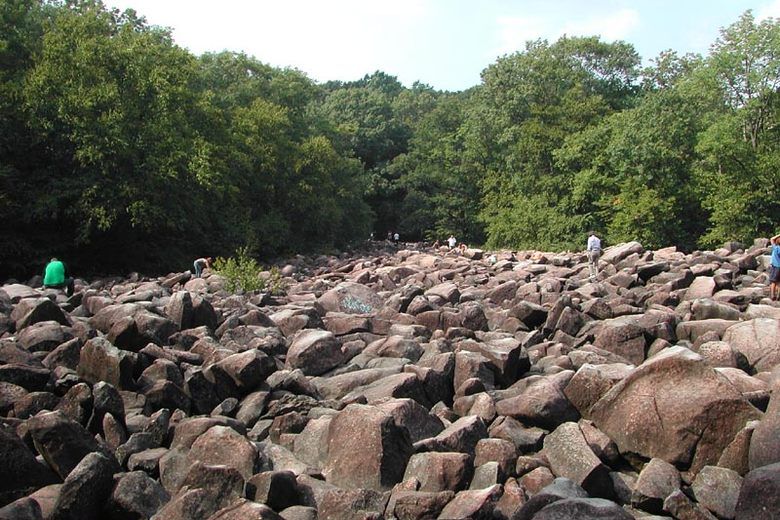
This seven-acre boulder field acts as a massive natural instrument, where ancient stones emit clear, metallic chimes when struck with a hammer, a phenomenon that still puzzles geologists.