High Desert Artistry
Ra Paulette’s Sandstone Caves: Subterranean Temples of New Mexico
New Mexico, United States
By the Wicked Cool Places editors · Published · Updated
Why it’s cool
For over a quarter-century, a lone artist has manually sculpted more than a dozen sandstone caves into elaborate, light-filled temples designed to inspire spiritual reflection and quiet discovery.
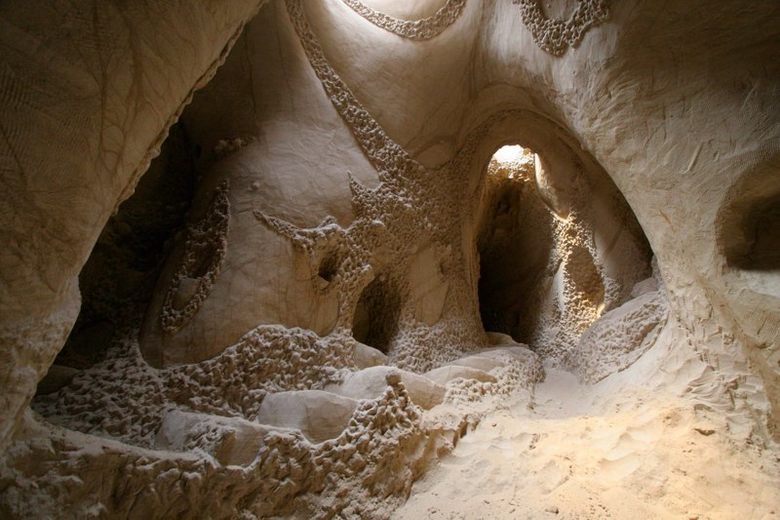
Deep within the arid cliffs north of Santa Fe, the soft sandstone hides a secret world of manual labor and artistic devotion. These aren't natural geological formations, but the result of one man's obsession with the earth itself.
Ra Paulette has spent decades tunneling into the desert rock, turning dark crevasses into luminous, hand-chiseled sanctuaries that feel more like living cathedrals than mere holes in the ground.
Why It Stands Out
Paulette's work is a masterclass in patience and vision. Eschewing heavy machinery, he relies on hand tools to hollow out fourteen distinct chambers, each possessing its own architectural personality.
A similar spirit of solo desert construction can be found at the Mystery Castle. Some spaces are defined by narrow, intimate entryways that open into soaring vaults, while others feature intricate floral reliefs and abstract sunbursts etched directly into the walls.
Natural light plays a vital role in the experience; carefully placed skylights allow the New Mexico sun to pour in, illuminating carved benches and candle niches that invite visitors to sit in silence. Other underground spaces in the region include the massive Carlsbad Caverns.
For the artist, the act of creation is a spiritual service rather than a commercial enterprise. He views these caves as gifts to the landscape, intended to provide a sense of epiphany or peace to anyone who happens upon them.
The designs are so integrated with the surrounding stone that they appear to have grown organically, bridging the gap between human intervention and the natural world. This integration of architecture and earth is also a hallmark of Mesa Verde National Park.
Before You Go
Finding these hidden sanctuaries has become increasingly difficult over the years. While the artist's original intent was for public discovery, the practical realities of land ownership have shifted the landscape.
Most of these hand-carved wonderlands are located on private property. Due to a history of unauthorized visitors and safety concerns, the current landowners have restricted access to the sites.
It is essential to respect these boundaries and avoid trespassing, as the caves are no longer open for general public exploration.
Questions worth answering
What makes these caves different from a natural cavern?
These chambers are the result of one man's decades-long obsession with desert rock. Ra Paulette used hand tools to hollow out fourteen separate spaces, turning dark crevasses into sanctuaries filled with light.
Can we walk through the tunnels today?
The short answer is no. Because these sites sit on private land and have safety issues, the current owners don't allow visitors inside anymore.
What do the interiors actually look like?
The walls feature hand-chiseled floral reliefs and abstract sunbursts. Skylights are positioned to let the sun hit carved benches and niches, creating a mood that's more like a cathedral than a hole in the ground.
How did the artist manage to carve such large spaces into the rock?
Ra Paulette didn't use heavy machinery to create these fourteen chambers. He relied on hand tools and manual labor for over twenty-five years to hollow out the soft sandstone cliffs.
More in Southwest
All Southwest places →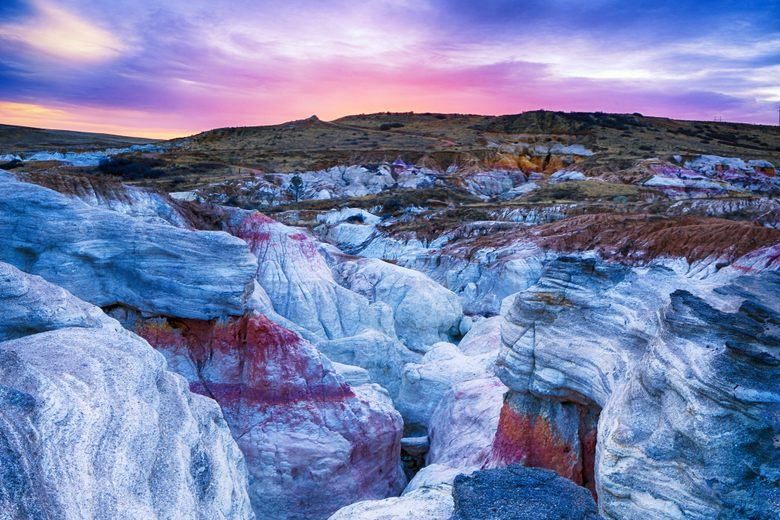
Paint Mines Interpretive Park
Calhan, Colorado
These vibrant sandstone hoodoos served as a natural pigment source for 9,000 years, providing ancient peoples with the colorful clays needed for pottery and ceremonial paint.
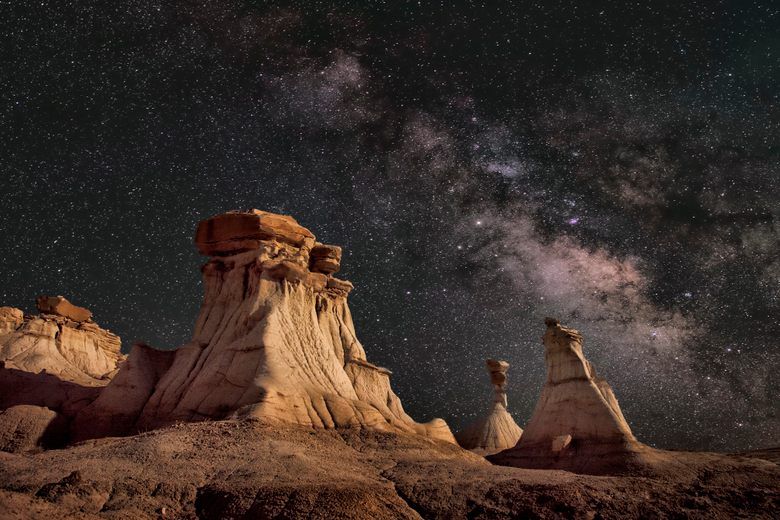
Bisti Badlands
Farmington, New Mexico
This remote New Mexico wilderness features a surreal collection of top-heavy hoodoos and undulating sandstone shapes that look more like an alien planet than the American Southwest.
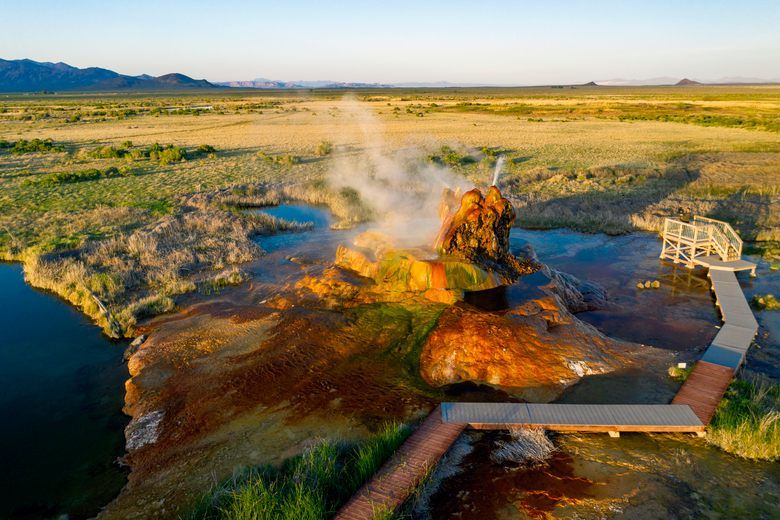
Fly Geyser
Gerlach, Nevada
This accidental masterpiece in the Black Rock Desert was born from botched well-drilling projects. Today, thermophilic algae paint its growing mineral mounds in brilliant shades of red and green, creating a surreal landscape that feels entirely extraterrestrial.