Desert Cave Exploration
Carlsbad Caverns: The Massive Limestone Labyrinth of New Mexico
Carlsbad, New Mexico, United States
By the Wicked Cool Places editors · Published · Updated
Why it’s cool
What began as a teenager's curiosity after spotting a 'black tornado' of bats evolved into the discovery of a world-class cave system. It features one of the planet's largest chambers and a history involving everything from guano mining to Cold War testing.
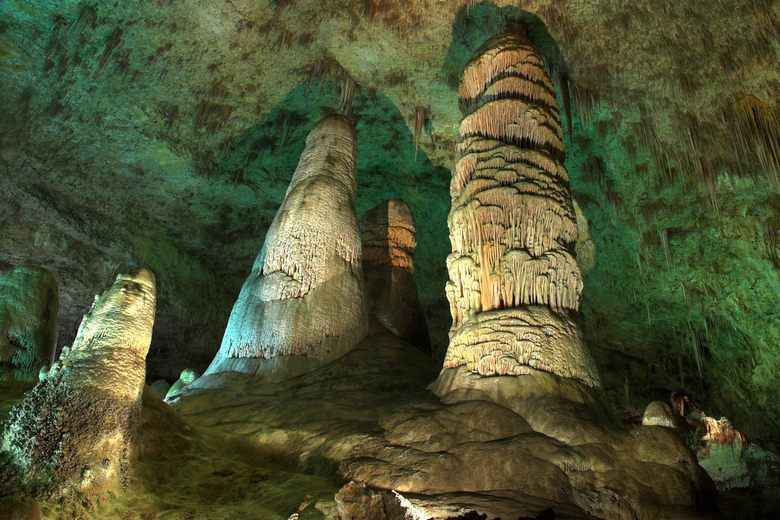
In 1898, a teenage boy named Jim White was riding through the Chihuahuan Desert when he spotted a dark, swirling column rising from the earth. It looked like a tornado, but it was actually a massive colony of bats emerging from a hidden opening.
Armed with little more than homemade torches and a ball of string, White descended into the void, uncovering a limestone kingdom that would eventually become one of the most famous cave systems on Earth.
Why It Stands Out
The scale of the caverns is difficult to grasp until you are standing inside the "Big Room," a massive limestone chamber that ranks among the largest on the planet. Stretching 4,000 feet long, it is filled with intricate formations that White gave whimsical names, such as the Totem Pole and the Witch’s Finger.
Beyond its geological wonders, the cave has a colorful human history. Before it was a national park, it served as a source for bat guano used in California orchards, with miners and early tourists being lowered into the depths in large buckets.
During the Cold War, the military even used the still waters of the Green Lake Room to monitor for ripples during nearby atomic tests. The Dupont Underground also served as a facility during the Cold War. The cave continues to reveal secrets.
In the 1980s, explorers used balloons to float ropes up to high-altitude ledges, discovering pristine areas like the Spirit World. Other subterranean wonders in the region include Ra Paulette's Hand-Carved Caves.
Despite its popularity, the cave remains a wild environment; the nearby Lechuguilla system is so complex that rescues can take hundreds of people and several days to complete. Even today, the names White bestowed, like the Bottomless Pit and the Queen’s Chamber, reflect the youthful spirit of the original exploration.
Before You Go
The most iconic experience at the caverns is the evening bat flight, which occurs from late spring through early autumn. Hundreds of thousands of Brazilian free-tailed bats exit the natural entrance in a spectacular spiral.
Visitors gather at the amphitheater to watch, but silence is required, and all electronic devices must be powered down to avoid disorienting the animals. The emergence can last for up to three hours depending on the evening.
Questions worth answering
How did this place get on our radar?
We took the original Carlsbad Caverns report and built our own editorial from there. It covers everything from the early guano mining days to the subterranean military tests.
What's the best way to see the bats?
Show up between late May and October for the evening exit. You'll need to kill your phone and stay quiet while the colony spirals out for up to three hours.
Is the cave really that large?
The Big Room is nearly 4,000 feet long. It's one of the biggest limestone chambers you'll find anywhere on the planet.
What kind of energy should I expect?
The vibe here is pure adventure. You're walking through a space first explored by a teenager with a ball of string and some homemade torches.
More in Southwest
All Southwest places →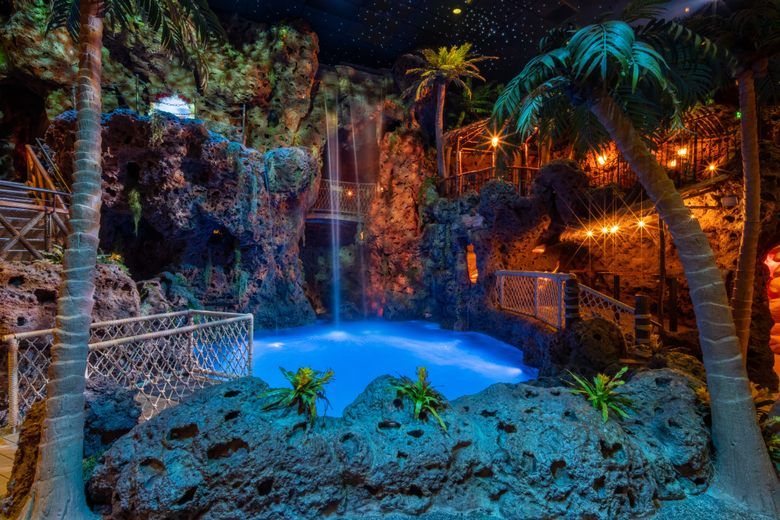
Casa Bonita
Lakewood, Colorado
This massive pink palace combines cliff diving, puppet shows, and gorilla chases with a $40 million makeover by the creators of South Park.
Ah-Shi-Sle-Pah Wilderness Study Area
Bloomfield, New Mexico
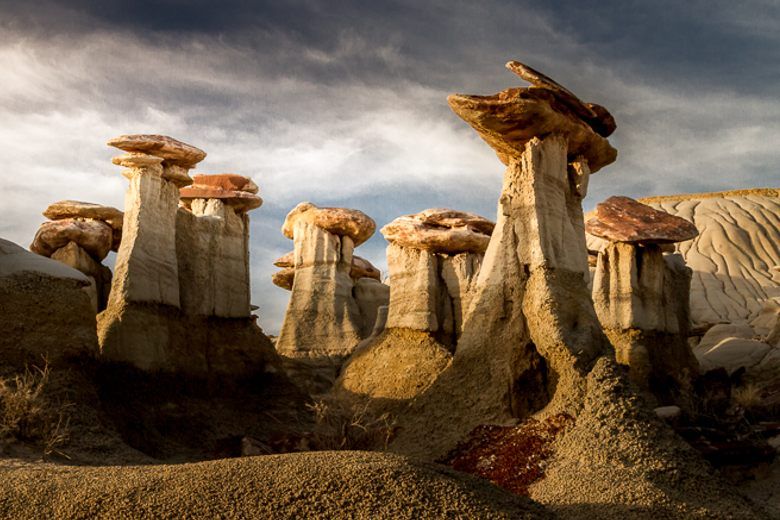
This remote stretch of the San Juan Basin features a surreal collection of "fairy chimneys" and petrified stumps, offering a silent, fossil-rich window into the Cretaceous period.
Dig This
Las Vegas, Nevada
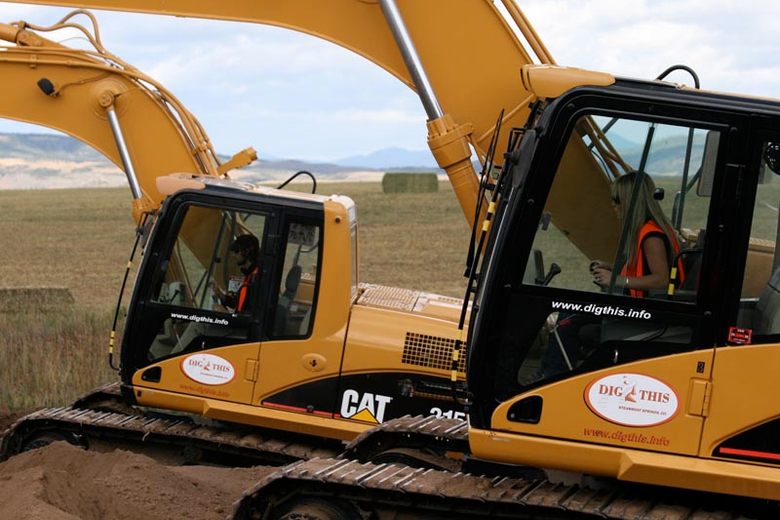
This massive sandbox allows adults to fulfill their childhood construction dreams by operating full-sized bulldozers and excavators under professional supervision.