Tennessee's Luminous Summer Ritual
Great Smoky Mountain Fireflies: Nature's Synchronized Light Show
Gatlinburg, Tennessee, United States
By the Wicked Cool Places editors · Published · Updated
Why it’s cool
These rare Appalachian beetles coordinate their bioluminescent displays to pulse and fade in total unison, turning the Tennessee forest into a rhythmic, glowing masterpiece for just a few nights each year.
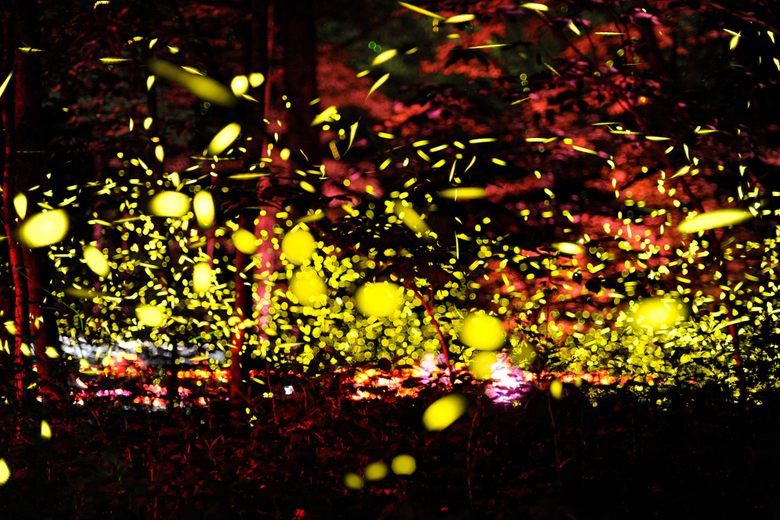
Deep within the Elkmont woods, the summer darkness isn't static. Every June, the forest floor transforms into a rhythmic grid of light where thousands of insects blink as if controlled by a single master switch.
This isn't just a random flicker; it is a rare display of biological coordination that was once thought to exist only on the other side of the planet.
Why It Stands Out
For centuries, Western science believed that synchronized bioluminescence was a phenomenon exclusive to Southeast Asia. It wasn't until 1992 that researchers realized the *Photinus carolinus* species in the Appalachian highlands possessed the same ability.
The display follows a strict mathematical cadence: a three-second burst of six rapid flashes followed by six seconds of absolute, heavy darkness. This "coupled oscillation" creates a pulsing wave of light that moves through the canopy.
The forest's natural geometry is also explored in the 'Wood Line' installation. Interestingly, the discovery in Tennessee was sparked by a local resident's letter to a mathematician, pointing out that the bugs near her cabin were doing exactly what scientists claimed only happened in the tropics.
Since the official confirmation in 1995, similar populations have been found in South Carolina and other high-altitude Appalachian spots, but the Smoky Mountains remain the most iconic stage for this ephemeral event.
Before You Go
Accessing the Elkmont viewing area requires significant planning due to the event's extreme popularity. The National Park Service operates a lottery system for vehicle passes, as demand far outweighs the 1,800 available spots.
Winners typically board trolleys at the Sugarlands Visitor Center, which ferry spectators to the Little River Trailhead. If you aren't using the shuttle, you must secure a standard park parking pass from a kiosk or visitor center beforehand, as they are not sold on-site at the Elkmont campground.
The peak window usually lands in early June, and the show begins in earnest around 10 p.m.
Questions worth answering
What's the actual pattern of the light show?
The display follows a precise rhythm of six quick flashes over three seconds. After that, the woods go completely dark for six seconds before the cycle repeats.
How do we get a spot to see this?
The National Park Service uses a lottery to manage the 1,800 available vehicle passes. If you win, you'll likely catch a shuttle from the Sugarlands Visitor Center to reach the trailhead.
Is there a specific time we should arrive?
The beetles usually start their performance around 10 p.m. during the peak window in early June. Shuttles to the Elkmont area depart every 20 to 25 minutes for those with lottery spots.
Where else can we see these synchronized beetles if we miss the Tennessee show?
While the Smoky Mountains are the most famous location, researchers have found similar populations in South Carolina and other high-altitude areas within the Appalachian range. Science originally thought this rhythmic blinking only happened in Southeast Asia until the 1990s.
More in Southeast
All Southeast places →
Manatee Springs State Park
Chiefland, Florida
Each winter, this first-magnitude spring becomes a vital thermal sanctuary for manatees seeking warmth. Visitors can witness these gentle giants grazing on river grasses or explore the massive underwater cave systems that feed the crystal-clear run.
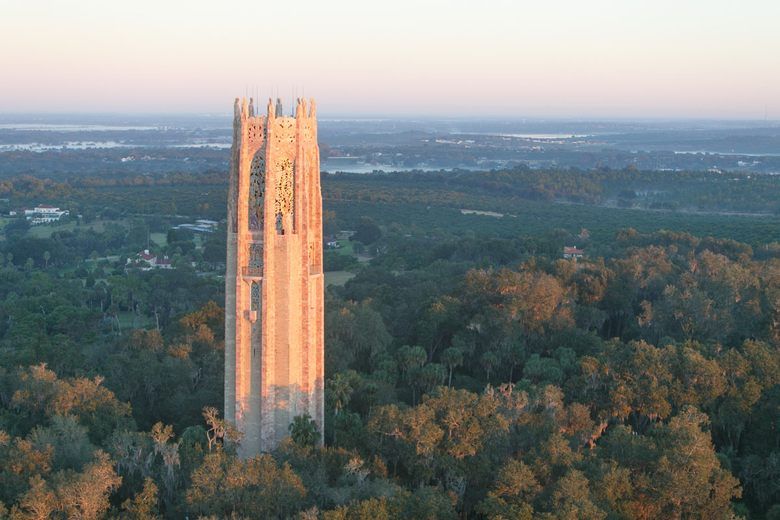
Bok Tower Gardens
Lake Wales, Florida
Perched on one of Florida’s highest peaks, this sanctuary features a 60-bell carillon housed in a stunning Art Deco tower. It blends world-class landscape architecture with a unique musical library and daily bell concerts.
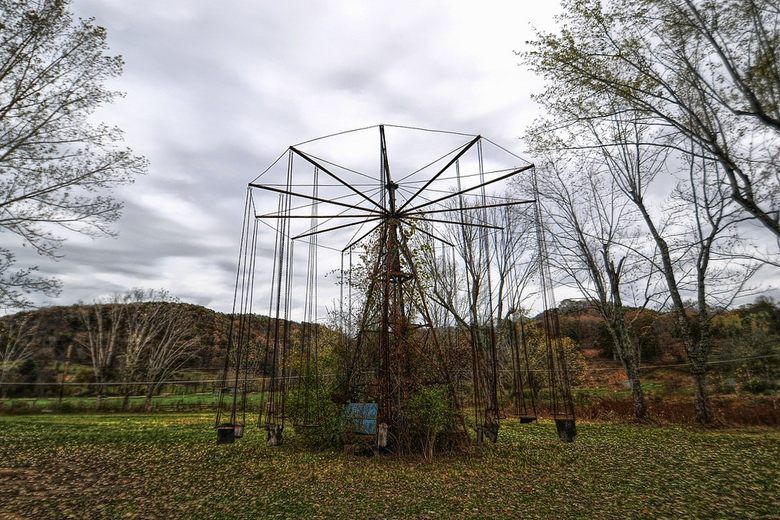
Lake Shawnee Amusement Park
Rock, West Virginia
This decaying fairground sits atop a site of tragic 18th-century conflict, blending the skeletal remains of 1920s carnival rides with a heavy, haunted legacy.