Los Angeles Modernism
Chemosphere: The Futuristic Saucer House of the Hollywood Hills
Los Angeles, California, United States
By the Wicked Cool Places editors · Published
Why it’s cool
This saucer-shaped home perches on a single concrete pillar high above the Hollywood Hills. It represents a daring feat of engineering that turned an unbuildable slope into a cinematic icon.
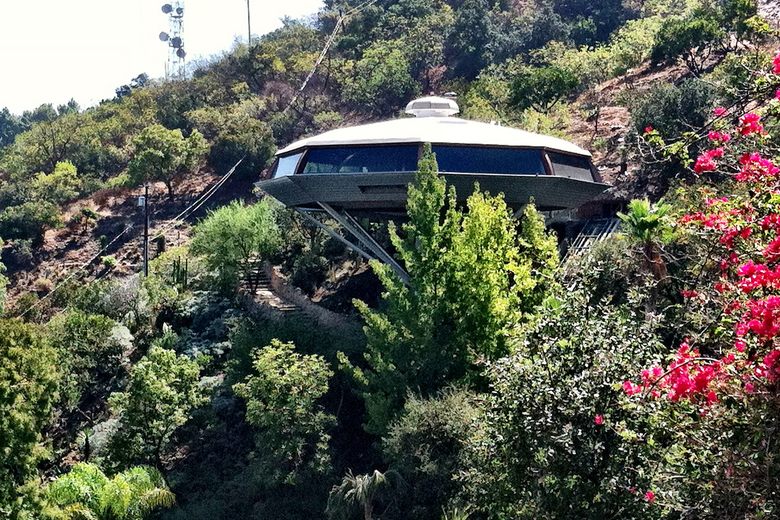
High above the winding roads of Hollywood, a structure resembling a grounded spacecraft hovers over the landscape. While officially titled the Malin House, the Chemosphere is a residence that defies traditional design.
It was born from a challenge that many architects found insurmountable. The property was a steep slope that seemed impossible to build upon until aerospace engineer Leonard Malin took ownership.
Why It Stands Out
Malin received the property as a gift from his wife's father but lacked the massive budget usually required for hillside construction. He collaborated on a design for a home that would sit on a single, sturdy concrete stilt.
This approach preserved the natural terrain while providing a panoramic view of the surrounding hills. To fund the project, Malin secured sponsorships from various companies.
One key contributor was a chemical manufacturer that provided advanced resins and polymers for the construction. This partnership led to the enduring nickname that describes the house today.
The building eventually became a fixture in Hollywood culture. Its futuristic aesthetic made it a natural choice for filmmakers.
It was featured in the Charlie's Angels films and the movie Body Double. However, years of high-profile parties and neglect eventually took a toll on the structure.
The house was eventually purchased by Benedikt Taschen, the founder of the namesake art book company. Taschen oversaw a meticulous restoration that returned the saucer-shaped dwelling to its former glory.
Today, it remains one of the most photographed and recognizable examples of modernism in California. Another unique architectural landmark in the region is the Idle Hour.
The home serves as a reminder of an era when Los Angeles architecture was defined by bold experimentation and the belief that even the most difficult terrain could be conquered with the right engineering.
Before You Go
The Chemosphere is a private residence located on Torreyson Drive. Because it is a personal home, there are no public tours or interior access for the general population.
You can view the exterior from the street, but visitors must be respectful of the residents and the narrow mountain roads. Parking is extremely limited and the area is strictly residential.
Questions worth answering
Can I see the inside of the house?
The property is a private home on Torreyson Drive. You won't find public tours or any way to get inside the building.
Where did the name Chemosphere come from?
A chemical company helped pay for the construction. They provided specialized resins and polymers, which led to the house's famous nickname.
Is it easy to drive up and take photos?
The mountain roads are narrow and parking is very hard to find. You can see the exterior from the street, but you'll need to be quick and quiet.
How does the building stay on the hill?
It sits on a lone concrete pillar. This engineering choice allowed the original owner to build on a slope that others thought was impossible.
More in West Coast
All West Coast places →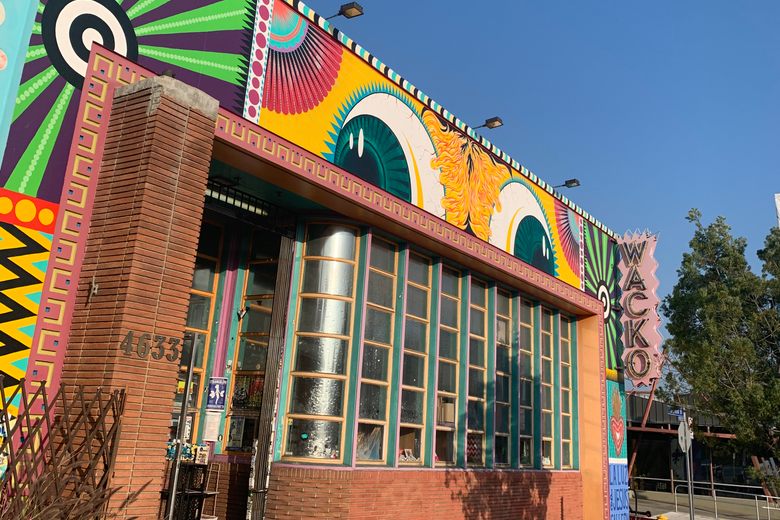
Soap Plant / Wacko
Los Angeles, California
This legendary Los Feliz destination combines a sophisticated art gallery with a massive warehouse of niche books, eccentric toys, and preserved biological specimens.
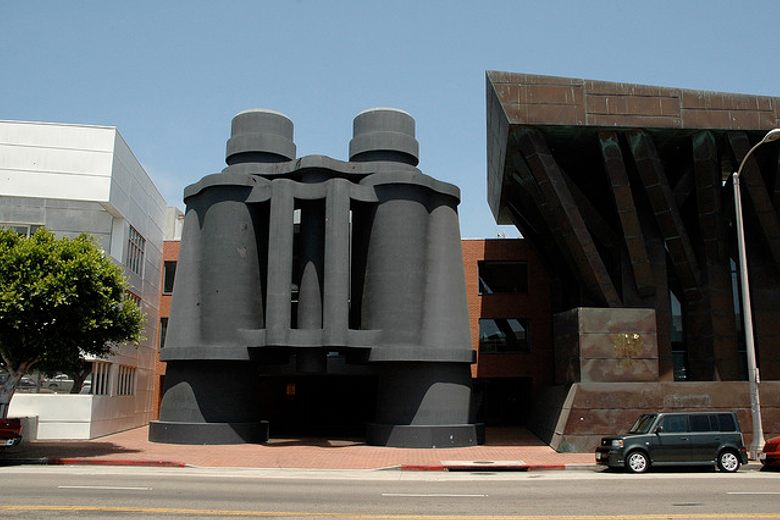
Binoculars Building
Los Angeles, California
This Frank Gehry landmark uses a massive pair of binoculars to bridge two office wings, blending deconstructivist architecture with oversized pop art.

Phantasma Gloria
Los Angeles, California
This sprawling web of wire and colored glass bottles captures the California sun to create a massive, shimmering mosaic that fills a residential front yard.