Los Angeles Spiritual Landmark
Cathedral of Our Lady of the Angels: A Postmodern Fortress of Light
Los Angeles, California, United States
By the Wicked Cool Places editors · Published · Updated
Why it’s cool
This 333-foot-long architectural marvel houses the largest collection of Spanish alabaster in the U.S. and a sprawling basement mausoleum where Hollywood legend Gregory Peck rests alongside ancient Roman martyrs.
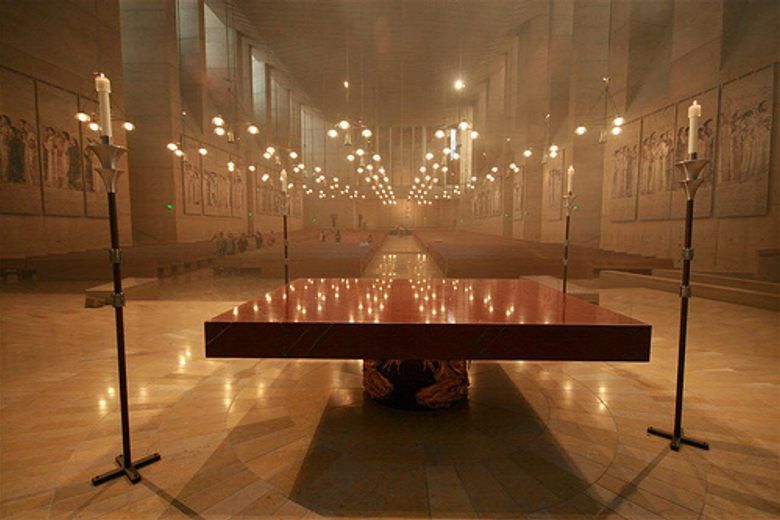
Rising over downtown Los Angeles, this cathedral is a massive, postmodern anchor for the city's spiritual life. Designed by Spanish architect Rafael Moneo, the structure was commissioned to replace the earthquake-damaged Cathedral of Saint Vibiana.
Rather than mimicking the spires of old Europe, Moneo created a complex that feels more like a contemporary fortress, utilizing a minimal number of right angles and a vast, tan-colored exterior.
Why It Stands Out
The sheer scale and material ambition of the building are staggering. The cathedral measures exactly 333 feet in length, deliberately constructed to be one foot longer than New York City’s St.
Patrick’s Cathedral. Inside, the space is illuminated by the largest installation of Spanish alabaster in the United States, which filters the Southern California sun into a soft, warm glow.
This focus on light and "the journey" was central to the design, even as the project faced criticism for its high costs, including a multimillion-dollar marble table and elaborate bronze doors. These doors eschew typical biblical narratives in favor of complex symbolic imagery related to Christian mystical numbers.
Beneath the main floor lies a sprawling mausoleum containing 6,000 crypts. This lower level is a mix of modern design and historical preservation, featuring stained glass salvaged from the original cathedral and produced by the renowned Judson Studios.
Among the many bishops and archbishops interred here is Hollywood icon Gregory Peck. The nearby Hollywood Forever Cemetery is another notable final resting place for industry figures.
However, the most significant resident is Saint Vibiana, a third-century Roman martyr whose relics were brought to California in the mid-19th century. Her presence links this ultra-modern structure to the earliest days of the faith.
The Holyland Exhibition also displays artifacts related to the region's religious history.
Before You Go
The cathedral is a functioning place of worship, so visitors should be mindful of scheduled masses and events. The mausoleum is located on the lower level and is generally accessible to the public during regular hours.
Take time to examine the intricate bronze doors and the massive alabaster windows, which provide a unique alternative to traditional stained glass in the main sanctuary.
Questions worth answering
What's the best way to see the interior?
The main sanctuary uses massive panels of Spanish alabaster to filter the California sun into a warm glow. We'd suggest checking the schedule for masses first, as this remains an active place of worship.
Is there anything worth seeing in the basement?
The lower level houses a mausoleum with six thousand crypts and salvaged glass from Judson Studios. You'll find the remains of Gregory Peck there, along with relics belonging to Saint Vibiana.
How does the scale compare to other famous cathedrals?
Rafael Moneo built it out to 333 feet. That was deliberate. It lands a single foot past New York's St. Patrick's Cathedral.
What should we look for on the main entrance doors?
The bronze doors avoid standard biblical scenes for complex symbolic imagery based on Christian mystical numbers. They're part of a design that cost millions, including a massive marble table and specialized alabaster windows.
More in West Coast
All West Coast places →
Screen Novelties
Los Angeles, California
This boutique studio preserves the tactile charm of stop-motion animation. Beyond creating modern hits, they famously restored the original puppets from the 1964 Rudolph the Red-Nosed Reindeer special.
Old Zoo Picnic Area
Los Angeles, California
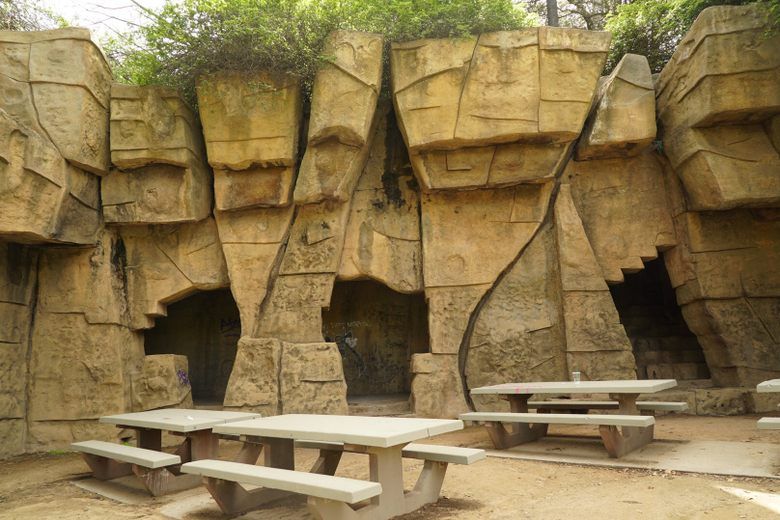
This former menagerie offers the rare chance to step inside historic bear grottos and lion dens, turning once-stifling animal enclosures into a surreal setting for a public park lunch.
Idle Hour
Los Angeles, California
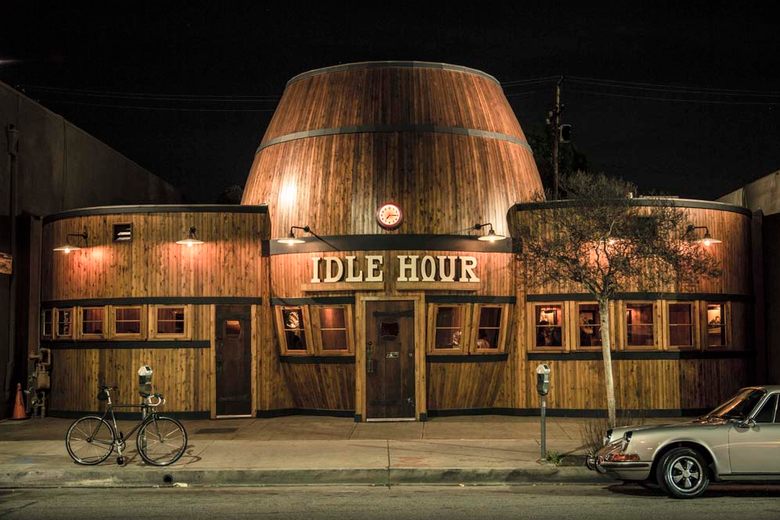
This North Hollywood landmark is a rare surviving example of programmatic architecture, where the building itself takes the shape of a towering whiskey barrel to lure in passing drivers.