Aquatic Sound Installation
The Wave Organ: San Francisco's Melodic Tidal Sculpture
San Francisco, California, United States
By the Wicked Cool Places editors · Published · Updated
Why it’s cool
This sprawling jetty installation transforms the rhythm of the San Francisco Bay into a natural symphony, using a network of pipes and salvaged cemetery marble to amplify the ocean's voice.

At the edge of the Marina District, the Pacific Ocean finds its voice through a series of submerged pipes and repurposed architectural ruins. This site is a unique acoustic installation that creates a haunting soundtrack driven entirely by the movement of the tides.
Completed in 1986, the project was a joint effort between artist Peter Richards and the city’s famed Exploratorium. It isn't just a musical instrument; it is a landscape of salvaged history, constructed using granite and marble slabs recovered from a demolished cemetery.
Other historic burial grounds like Mount Moriah Cemetery also showcase the intersection of architecture and nature. These finely worked fragments now serve as terraced benches where visitors can sit and listen to the water’s rhythmic churning.
The artistic use of stone here mirrors the historic masonry found at Forest Hills Cemetery.
Why It Stands Out
The magic of the installation lies beneath the surface, where more than 20 pipes made of concrete and PVC reach down into the bay. As waves strike the openings of these tubes, they compress columns of air to produce deep, gurgling tones.
The physics mirror the resonance of a conch shell, but with a dynamic twist: because the water level is constantly shifting, the volume of air inside the pipes changes, which in turn alters the pitch. A rising tide might produce a higher melody, while the receding water creates low, cavernous drones.
Beyond the auditory experience, the location offers some of the most serene views in the city. From the jetty, you can scan the horizon to see the Golden Gate Bridge, the Marin Headlands, and the San Francisco skyline.
It is a favorite haunt for local fishermen in the early morning, offering a sense of isolation and peace that feels miles away from the nearby urban bustle.
Before You Go
Timing is everything when visiting this site. To hear the organ at its most vocal, you must plan your trip around high tide; during low tide, the pipes may remain silent or produce only faint whispers.
The walk to the jetty takes you past the marina, and while there is a private club nearby with closer access, public parking is restricted to the main marina lots a short walk away. For those looking to make a day of it, the site is roughly 1.8 miles from the Crissy Field recreation area via a scenic waterfront trail.
Questions worth answering
When's the right time to hear the music?
Check the local tide charts before heading out. The pipes stay quiet when the water's low, so you'll want to arrive near high tide to catch the full sound.
What exactly are we sitting on?
The benches are actually repurposed architectural ruins. We're talking about granite and marble pieces taken from an old graveyard that was torn down.
How does the sound actually work?
Over 20 tubes made of PVC and concrete extend into the bay. As the water moves, it pushes air through them to create those low, gurgling notes.
Where should we leave the car?
Stick to the main marina lots for your vehicle. The private club nearby blocks off its spots, so expect a brief walk to reach the jetty.
More in West Coast
All West Coast places →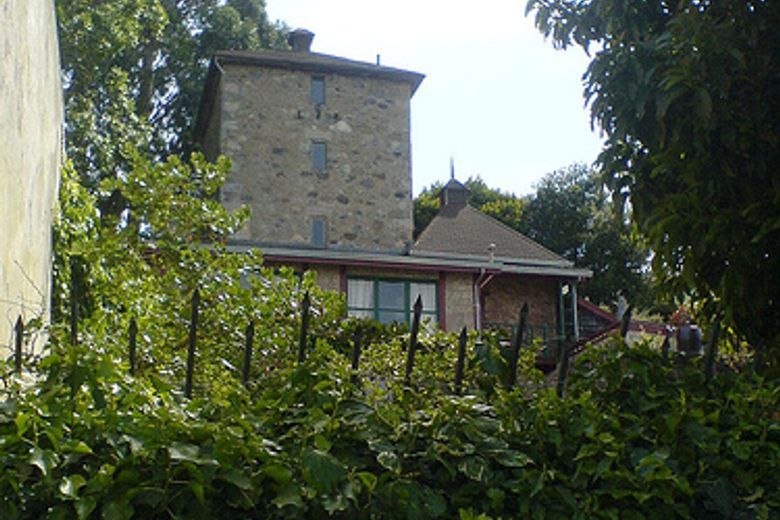
Albion Castle
San Francisco, California
A Norman-style stone tower rises above a hidden network of subterranean pools that still flow with fresh spring water, surviving decades of urban industrial shifts.
Magowan's Infinite Mirror Maze
San Francisco, California
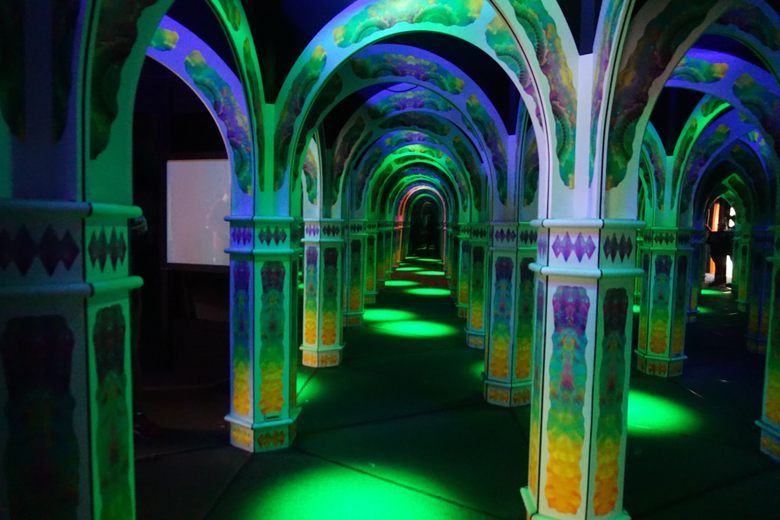
This neon-drenched labyrinth uses simple geometry to create a disorienting, psychedelic experience that feels like stepping into a 1990s rave.
Esmeralda Slide Park
San Francisco, California
This hillside sanctuary features a pair of slides carved into the landscape and a verdant stair corridor, offering a playful and lush escape from the city streets for nearly four decades.