Historic Chicago Artistry
Tiffany Dome: Chicago's Massive Stained-Glass Masterpiece
Chicago, Illinois, United States
By the Wicked Cool Places editors · Published · Updated
Why it’s cool
Spanning a massive 200 feet, this luminous ceiling is widely considered the largest Tiffany-designed dome on Earth, showcasing tens of thousands of glass pieces and intricate zodiac motifs.

High above the floor of Preston Bradley Hall, a celestial canopy of light and color stretches across the ceiling, anchoring one of Chicago's most impressive architectural interiors. This isn't just any skylight; it is a sprawling mosaic of glass and iron that has defined the space since the late 19th century.
Originally built to house the city's public library, the structure now serves as a cultural hub where more than 800,000 people gather annually to admire its intricate craftsmanship. Those who appreciate historic literary spaces may also enjoy visiting Myopic Books.
Why It Stands Out
The sheer scale of the installation is its most striking feature. Measuring 200 feet in diameter and covering 1,134 square feet, the dome is widely regarded as the largest creation of its kind.
It was finalized in 1897 under the direction of J. A.
Holzer, the lead mosaicist for the Tiffany firm. The design incorporates a staggering 30,000 individual glass panes, many shaped like fish scales, all held within a complex iron framework.
Look closely and you will spot the twelve symbols of the zodiac woven into the pattern. Travelers seeking different perspectives on the city might also enjoy the Willis Tower Glass Platform.
The history of the dome is one of transformation. For decades, the glass was illuminated by artificial backlighting after a second protective dome was added in the 1930s.
While functional, this obscured the original intent of the design. A major renovation in 2008 stripped away these layers to reintroduce natural sunlight, which now pours through the translucent glass once again.
The Garfield Park Conservatory is another local landmark that features impressive glass architecture. During this process, workers uncovered 5,568 glass jewels finished with copper foil.
The financial value of the work is equally staggering; while the entire building was once valued at $2,000,000, the dome itself is now estimated to be worth $35,000,000. If you have time, visit the building's secondary rotunda, located in the hall honoring the Grand Army of the Republic, to see a smaller but equally captivating glass dome.
Before You Go
Visitors can access the Chicago Cultural Center throughout the week. The building welcomes visitors daily beginning at 10 a.m.; weekday access continues until 7 p.m., while weekend hours wind down at 5 p.m.
For those interested in the deep history of the mosaics and the building's architecture, free guided tours are provided by expert docents every Thursday and Friday.
Questions worth answering
What's the best way to get the full backstory on the glass?
Show up on a Thursday or Friday for a walk-through with a docent. These tours don't cost anything and we've built our own editorial from there.
Is there a specific time we should plan to visit?
The doors stay open until 7 p.m. during the week. If you're coming on a Saturday or Sunday, they'll lock up by 5 p.m.
What should we look for besides the scale of the ceiling?
Keep your eyes peeled for the dozen zodiac symbols hidden in the patterns. You'll also notice thousands of glass jewels that were finished with copper foil.
How does the atmosphere feel inside?
It's a historic space where natural light finally hits the 30,000 glass panes again. The 2008 renovation removed the old artificial backlighting to let the sun do the work.
More in Midwest
All Midwest places →
International Museum of Surgical Science
Chicago, Illinois
This museum pairs the elegance of a Versailles-inspired chateau with the visceral reality of medical history, featuring everything from barber-surgeon saws to heart valves.
Myopic Books
Chicago, Illinois
This sprawling Chicago institution offers a dizzying array of used titles packed into a multi-story space, creating a literal dreamscape for anyone who loves the smell of old paper.
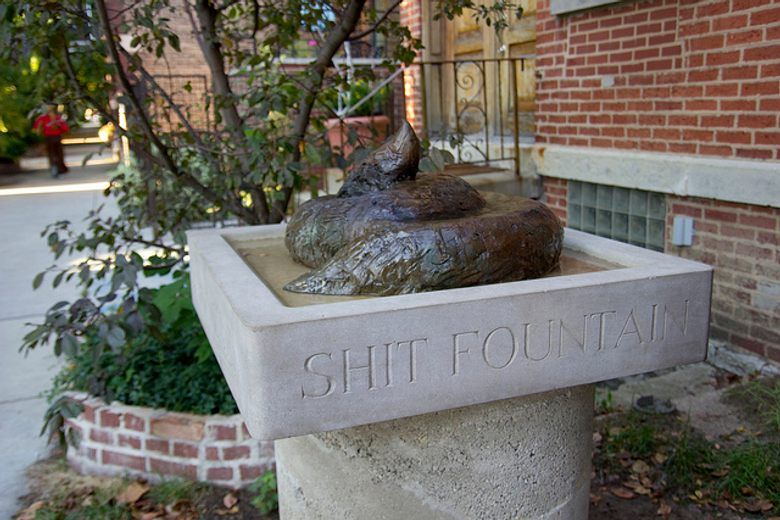
Shit Fountain
Chicago, Illinois
This bronze sculpture turns a common urban nuisance into a high-art statement, serving as both a playful jab at neighborhood dogs and a permanent reminder for owners to keep the sidewalks clean.