Boston's Luminous Cartography
Mapparium Globe: An Inside-Out Journey Through Stained Glass
Boston, Massachusetts, United States
By the Wicked Cool Places editors · Published · Updated
Why it’s cool
This massive, inverted globe offers a rare, distortion-free view of the planet’s surface. Visitors walk through its center on a glass bridge, surrounded by 1930s political boundaries and incredible surround-sound acoustics.
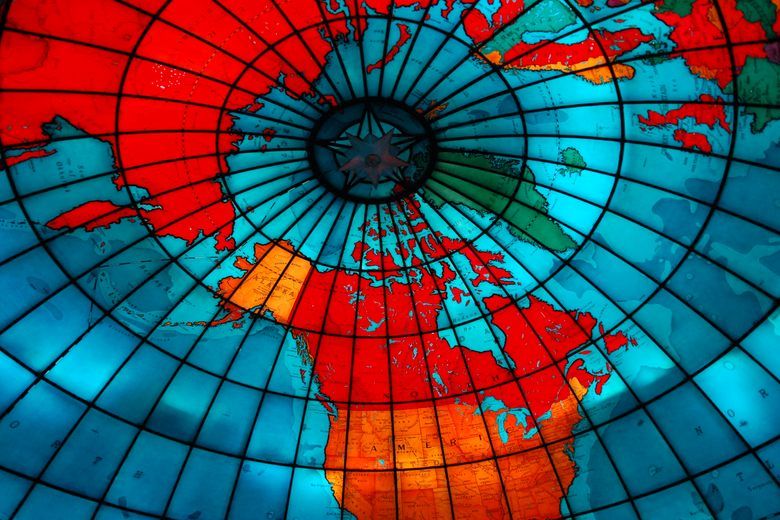
Standing on a transparent bridge suspended within a three-story orb, you might notice your own voice returning to you from every direction at once. This is the Mapparium, a glowing architectural feat that reverses the standard perspective of the planet.
Rather than peering down at a desk globe, visitors step into the heart of a massive stained-glass sphere to see the world exactly as it was charted in 1935.
Why It Stands Out
Commissioned for the Christian Science Publishing Society, architect Chester Lindsay Churchill designed this space to rival the grand newspaper lobbies of the era. While many globes distort the size of continents due to their curvature and the viewer's distance, the Mapparium provides a perfectly proportional view.
Another unique local collection can be found at the Isabella Stewart Gardner Museum. Because the walkway places the observer's eye at the exact center of the sphere, every point on the glass map is equidistant from the viewer.
This unique vantage point reveals the true scale of Africa and the crowded proximity of Europe and Asia near the North Pole. The immersive visual experience shares a similar sense of scale with the Yayoi Kusama Firefly Infinity Mirror Room.
The map itself serves as a vibrant time capsule. History is also preserved nearby at the Brattle Book Shop.
Because the glass has remained unchanged since its installation, the political borders reflect a world before the geopolitical shifts of the late 20th century. Visitors can spot the sprawling USSR, French Indochina, and Siam, while modern nations like Israel or Indonesia are absent.
Beyond the visual history, the sphere is a masterclass in acoustics. The hard, curved glass surfaces do not absorb sound; instead, they reflect it with startling efficiency.
This creates a "whispering gallery" where a quiet comment made at one end of the bridge can be heard clearly at the opposite side, while someone standing at the very center experiences their own speech in a 360-degree surround-sound effect.
Before You Go
The globe is the centerpiece of the "How Do You See the World?" exhibit. Access is provided via scheduled guided tours, and there is an admission fee to enter.
While the LED-lit glass is incredibly photogenic, be aware that photography and video recording are strictly prohibited inside the globe itself.
Questions worth answering
What makes the perspective here different from a standard globe?
You're standing on a glass bridge inside the sphere rather than looking at it from the outside. Because your eyes are at the center, every continent appears in its true proportion without the usual curvature distortion.
Is the map updated to show current national borders?
The glass hasn't changed since 1935, so it functions as a political time capsule. You'll see the USSR and Siam on the walls, but you won't find modern Israel or Indonesia.
Can I take a few photos of the stained glass?
The LED lighting looks great, but cameras and video recording are strictly forbidden once you're inside. You'll have to rely on your memory for this one.
How does the room's shape affect the sound?
The curved glass creates a whispering gallery effect that carries sound across the bridge. If you speak from the middle, your own voice hits you from every direction at once.
More in Northeast
All Northeast places →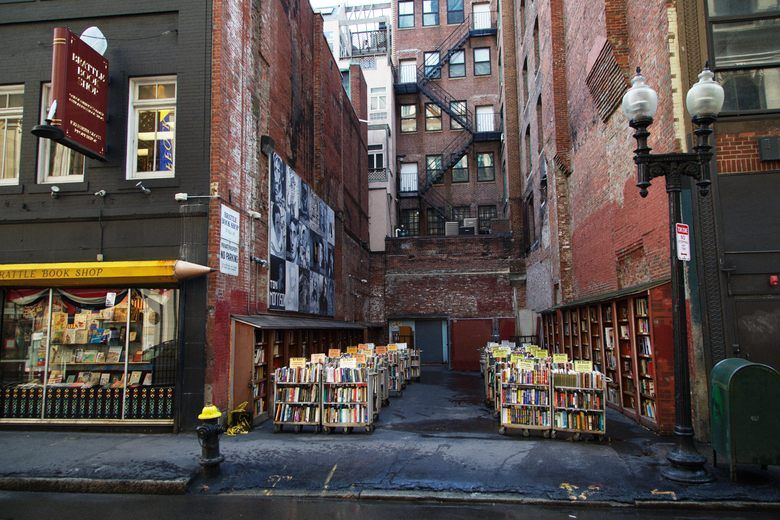
Brattle Book Shop
Boston, Massachusetts
Dating back to 1825, this family-run institution pairs a dense three-story collection of rare finds with a vibrant outdoor alleyway where bargain hunters sift through thousands of titles beneath the watchful eyes of literary giants.
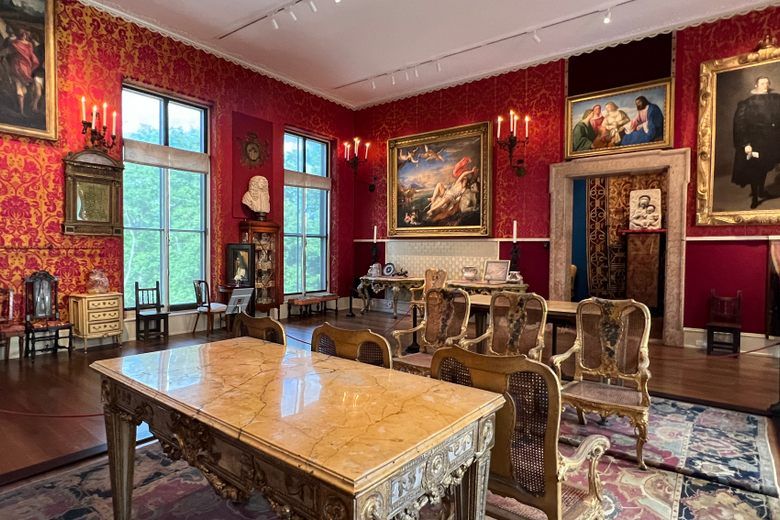
Isabella Stewart Gardner Museum (The Gardner)
Boston, Massachusetts
This Venetian-style palace houses over two thousand global treasures curated by a single visionary woman. It is famously home to the empty frames of the world's greatest unsolved art robbery, where masterpieces by Vermeer and Rembrandt once hung.
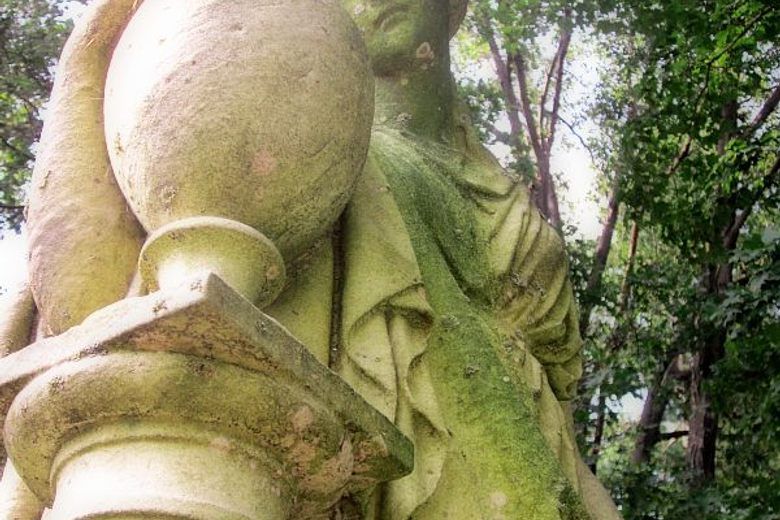
Forest Hills Cemetery
Boston, Massachusetts
This sprawling Victorian garden cemetery blends historic artistry with a whimsical 21st-century addition: a tiny village of stone replicas modeled after the actual homes of its permanent residents.