Manhattan’s Elevated Greenway
The High Line: Manhattan's Sky-High Industrial Garden
New York, New York, United States
By the Wicked Cool Places editors · Published · Updated
Why it’s cool
This former freight rail line escaped the wrecking ball to become a lush aerial promenade. It seamlessly blends wild urban flora with industrial history, offering a rare perspective of the city streets from thirty feet above the pavement.
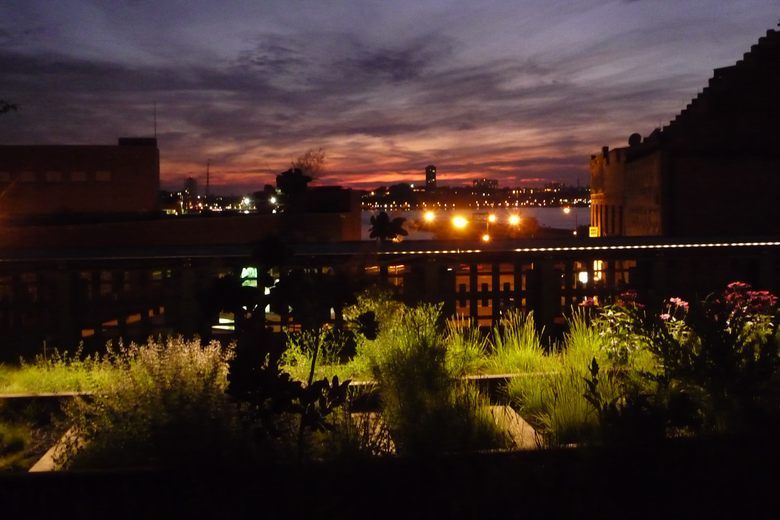
Stretching high above the bustling streets of Manhattan’s West Side, a once-forgotten industrial artery has found a second life as a vibrant aerial garden. Where freight trains once hauled frozen turkeys and heavy machinery, locals and travelers now stroll through carefully curated wildflowers and architectural installations.
The city also features other unique green spaces like New York's Hidden Tropical Forest. This elevated greenway represents one of the most successful urban reclamation projects in history, proving that even the most derelict structures can become city treasures.
Another example of urban reclamation is The Treasures in the Trash Collection.
Why It Stands Out
The story of this park begins with the dangerous reality of 19th-century New York. Before the tracks were raised, freight trains shared the pavement with pedestrians and horse-drawn carriages.
The situation was so perilous that 10th Avenue earned the grim nickname "Death Avenue," necessitating "West Side Cowboys" to ride ahead of locomotives to clear the path. In 1929, the city launched the West Side Improvement Project to move these tracks skyward.
Completed in 1934 at a cost exceeding two billion modern dollars, the railway snaked directly through the hearts of industrial buildings. By 1980, the rise of the Interstate Highway System and a decline in local manufacturing rendered the line obsolete.
For decades, it remained a secret wilderness for urban explorers and wildlife until a community-led preservation effort saved it from demolition in 1999. Today, the park is famous for its high construction cost per acre and its unique design that incorporates original steel rails into the walking paths.
As you walk through the Meatpacking District, the path offers framed views of the Hudson River and the surrounding cityscape, particularly during the golden hour. The success of this project has sparked a global movement in urban design.
It has inspired similar concepts like the "Low Line", a proposed underground park in an abandoned trolley terminal, and the potential conversion of overgrown rail lines in Queens. Subterranean transit history is also preserved at Old City Hall Station.
Before You Go
The park spans from the Meatpacking District up toward Midtown, weaving through various neighborhoods and even passing through some buildings. It is an ideal location for catching the sunset over the Hudson.
While the trains are long gone, look closely at the ground to spot the historic tracks still embedded in the landscape.
Questions worth answering
What is the history behind the tracks?
Before the 1929 West Side Improvement Project, trains ran at street level, earning 10th Avenue a morbid nickname. The elevated tracks eventually became obsolete by 1980, sitting as a hidden wilderness until local efforts halted their demolition in 1999.
Is the walk actually scenic?
The path sits thirty feet over the pavement, providing a vantage point you won't find anywhere else in Manhattan. We suggest timing your visit for the golden hour to see the Hudson River framed by the city's architecture.
Where did this information originate?
The details started with a piece from The High Line. We took our own editorial from there to highlight the industrial history and the way the steel rails remain part of the landscape.
Can I still see any of the original train infrastructure?
The design keeps the past visible by leaving the old metal tracks in the ground. You can find them woven into the walking paths as you move from the Meatpacking District toward Midtown.
More in Northeast
All Northeast places →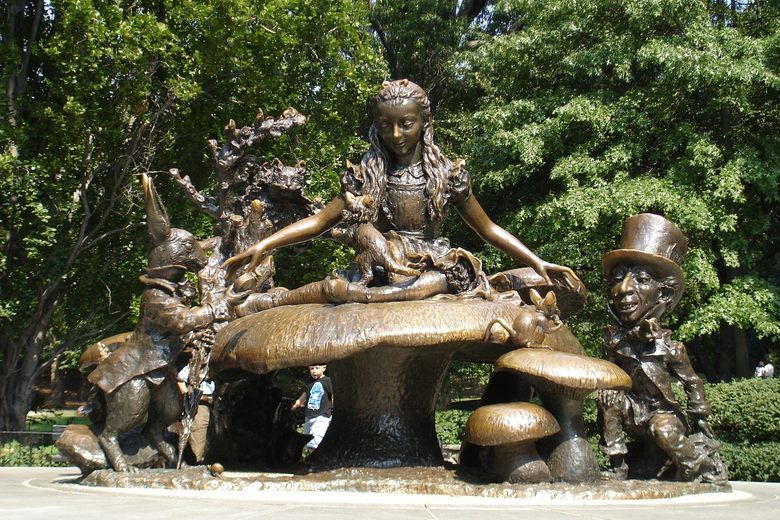
Alice in Wonderland Statue
New York, New York
This interactive bronze sculpture invites children to literally climb into Lewis Carroll's world, featuring a Mad Hatter modeled after the monument's benefactor.
Greenacre Park
New York, New York
This pocket park offers a rare moment of serenity in the heart of Manhattan, where the roar of a cascading waterfall drowns out the surrounding city traffic.
Roosevelt Island Tramway
New York, New York
This sky-high transit link is a true American rarity, serving as one of only two aerial tramways in the nation designed specifically for daily commuter use.