Fort Bragg Coastal Wonder
Glass Beach: California's Shimmering Shore of Recycled Relics
Fort Bragg, California, United States
By the Wicked Cool Places editors · Published · Updated
Why it’s cool
This former municipal dump has been reclaimed by the sea, where decades of crashing waves have tumbled broken bottles into smooth, multicolored pebbles.
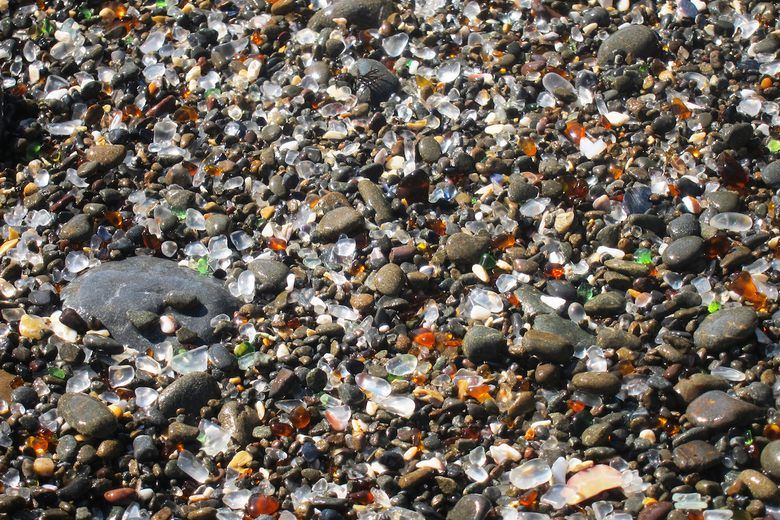
The rugged cliffs of Fort Bragg once served as a literal disposal site for the community's unwanted debris. Throughout the early 1900s, residents and the Union Lumber Company utilized this stretch of coastline, then known unceremoniously as "The Dumps", to discard everything from household bottles and ceramic plates to heavy appliances and even entire automobiles.
To manage the growing mounds of refuse, locals frequently set the piles ablaze, leaving behind a scorched landscape of twisted metal and shattered glass. The coastal ruins of Sunken City similarly showcase the intersection of human development and geological shifts.
Why It Stands Out
What makes this shoreline remarkable is the relentless alchemy of the Pacific Ocean. The Pacific's raw power is also on display at Thor’s Well.
After the site was officially shuttered in 1967, nature began a decades-long cleanup process. The constant churning of the surf ground down the jagged shards of discarded glass, smoothing their edges and polishing them into translucent, jewel-like pebbles.
Today, the beach is a testament to environmental resilience, where the remnants of a wasteful past have been softened into a kaleidoscopic carpet of sea glass. The Wave Organ is another coastal installation that repurposes materials to interact with the ocean's rhythm. In 2002, the 38-acre site transitioned from an industrial eyesore to a protected natural resource when it was purchased by the California State Park system and eventually joined MacKerricher State Park.
Before You Go
Visitors can find Glass Beach within the boundaries of MacKerricher State Park. While the site remains a popular destination for photographers and nature lovers, it is important to manage expectations regarding the amount of glass present.
Due to years of unauthorized foraging, the density of the glass has significantly thinned compared to vintage photographs. Removing any glass from the beach is strictly prohibited by law; visitors are encouraged to leave every shimmering fragment in place so that future generations can witness this unique intersection of human history and oceanic power.
Questions worth answering
What's the story behind all the glass on the shore?
The coastline near Fort Bragg was once a local dumping ground for household trash and old cars. Decades of ocean waves ground down the discarded bottles into the smooth, colorful pebbles you see now.
Can I take a few pieces of sea glass home with me?
No. Removing any fragments is illegal, as the beach has already thinned out from years of people taking things they shouldn't.
Is this beach part of a larger park system?
The state took over the 38-acre site in 2002. It's now officially part of MacKerricher State Park.
What kind of items were originally dumped at this site?
Before it was a park, people used these cliffs to toss household bottles, ceramic dishes, heavy appliances, and even cars. Locals often burned the piles, leaving a mess of metal and glass that the ocean eventually smoothed into the pebbles we see now.
More in West Coast
All West Coast places →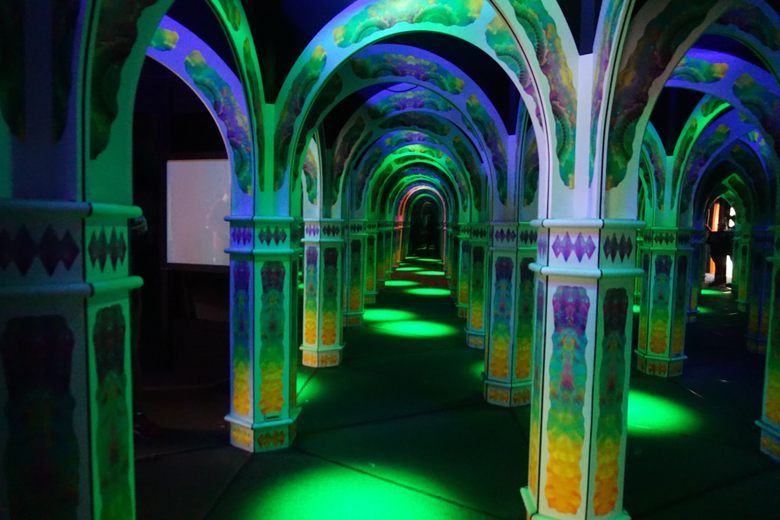
Magowan's Infinite Mirror Maze
San Francisco, California
This neon-drenched labyrinth uses simple geometry to create a disorienting, psychedelic experience that feels like stepping into a 1990s rave.
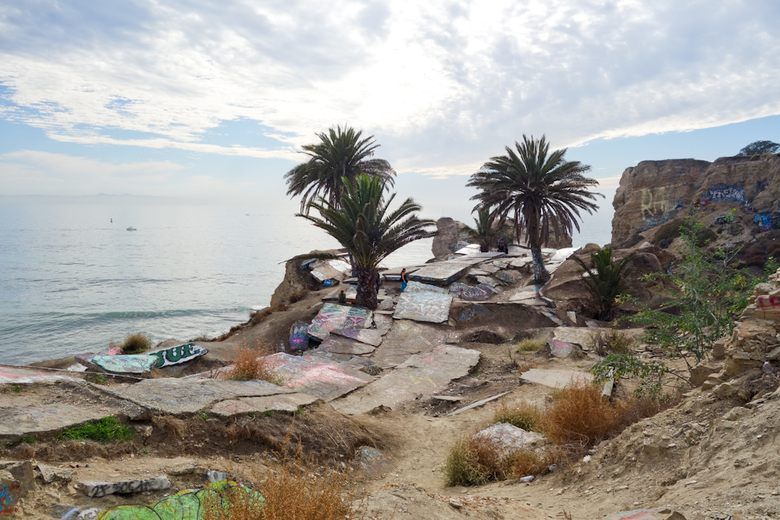
Sunken City
Los Angeles, California
This coastal ghost town features the broken foundations and abandoned rail lines of a neighborhood that literally slid into the sea during a massive 1929 geological shift.
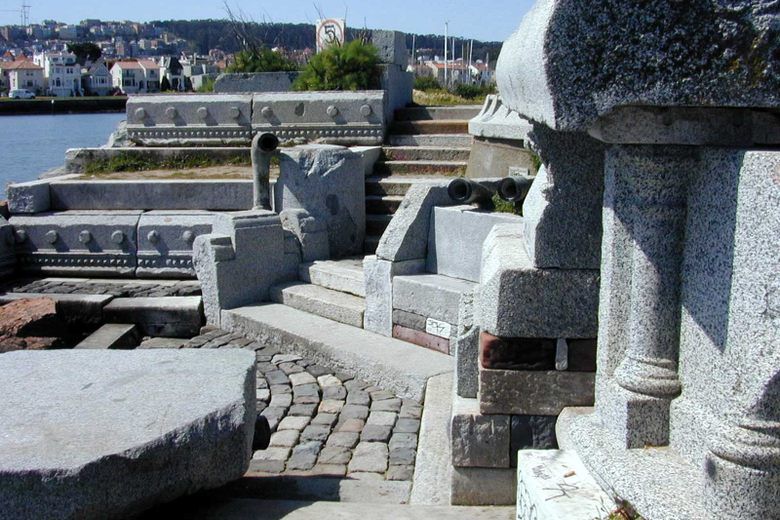
The Wave Organ
San Francisco, California
This sprawling jetty installation transforms the rhythm of the San Francisco Bay into a natural symphony, using a network of pipes and salvaged cemetery marble to amplify the ocean's voice.