Golden Gate Park
Garden of Fragrance: A Sensory Sanctuary of Ancient Stones
San Francisco, California, United States
By the Wicked Cool Places editors · Published · Updated
Why it’s cool
This specialized botanical enclave prioritizes olfactory and tactile experiences, utilizing medieval monastery ruins to house a fragrant collection of herbs and blossoms.
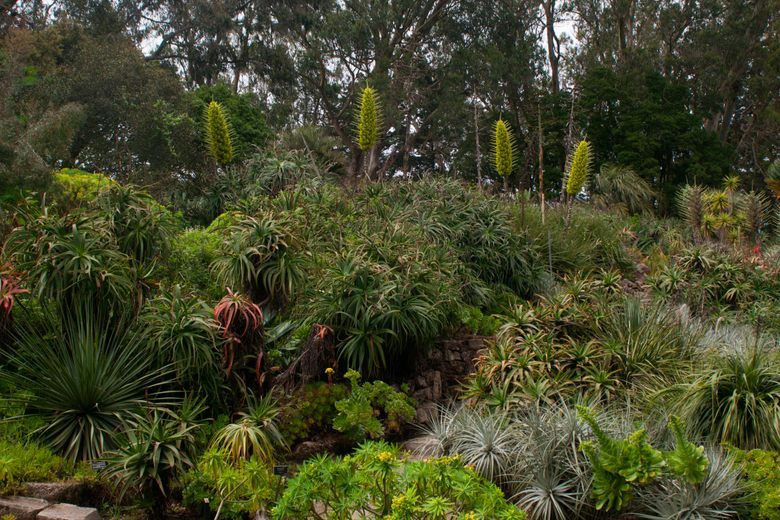
Tucked within the sprawling San Francisco Botanical Garden lies a pocket of greenery where the eyes take a backseat to the nose and fingertips. Established in 1965, the Garden of Fragrance was built to accommodate visitors with visual impairments or limited mobility, inviting everyone to engage with nature through a symphony of scents and textures.
Why It Stands Out
The garden’s layout encourages direct interaction, featuring raised beds and borders that bring aromatic plants within easy reach. Cascading rosemary spills over walls, while the sharp, clean scents of mint and lemon verbena fill the air.
These botanical displays are framed by a surprisingly ancient architectural element: stones salvaged from a 12th-century Spanish monastery. These weathered blocks were originally transported to the West Coast by media tycoon William Randolph Hearst before finding a permanent home as the foundation for this sensory retreat.
Watching over the lush greenery and a quiet pond is a bronze likeness of Saint Francis, the namesake patron of the city. This sculpture has its own storied past; crafted by artist Clara Huntington, daughter of railway magnate Collis Potter Huntington, it first appeared at the 1939 international exposition staged on Treasure Island.
After the fair, the figure was relocated here, where it now stands amidst a habitat frequented by local birds and pollinators.
Before You Go
You can find this specific grove just a short walk from the Botanical Garden’s main entrance; look for it on your right after passing through the gates. To deepen the experience, the garden offers a downloadable podcast and a PDF walking guide on its official website, providing context for the various species and historical artifacts you will encounter.
The paths are designed to be accessible, making it a gentle stop for all visitors.
Questions worth answering
What makes the layout here different from a standard park?
The design uses elevated beds to put plants at a height where you can touch and smell them easily. It was built in 1965 specifically to help people with limited sight or mobility experience the greenery.
Are there any historical buildings on the grounds?
You'll see weathered blocks that once belonged to a Spanish monastery from the 12th century. William Randolph Hearst brought these stones to the coast before they became the garden's foundation.
Who is the figure standing by the water?
A bronze statue of Saint Francis overlooks the pond and the local bird population. Clara Huntington created the piece for the 1939 international exposition held on Treasure Island.
How do we find this specific area once we enter the main grounds?
The grove sits just a short walk past the main entrance gates on your right. We suggest downloading the free podcast and PDF walking guide from their website before you arrive to get the full context of the plants.
More in West Coast
All West Coast places →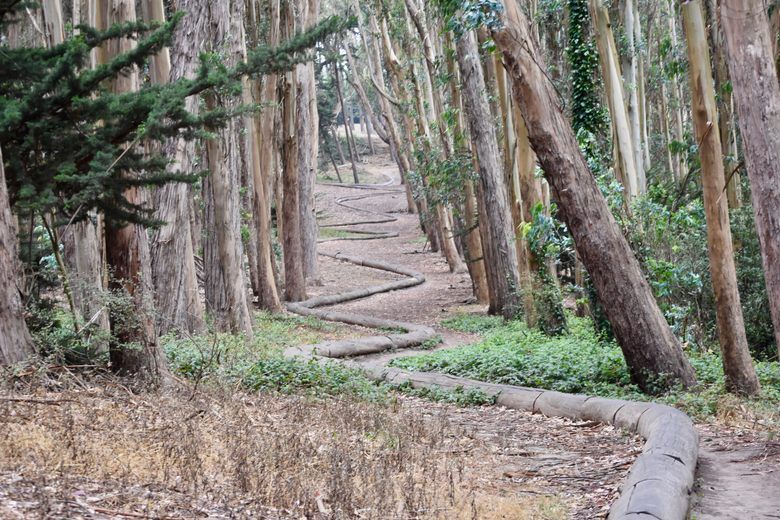
'Wood Line'
San Francisco, California
This undulating land-art installation repurposes fallen eucalyptus branches to fill a natural gap in the forest, creating a surreal walking path that slowly returns to the earth.
Esmeralda Slide Park
San Francisco, California
This hillside sanctuary features a pair of slides carved into the landscape and a verdant stair corridor, offering a playful and lush escape from the city streets for nearly four decades.
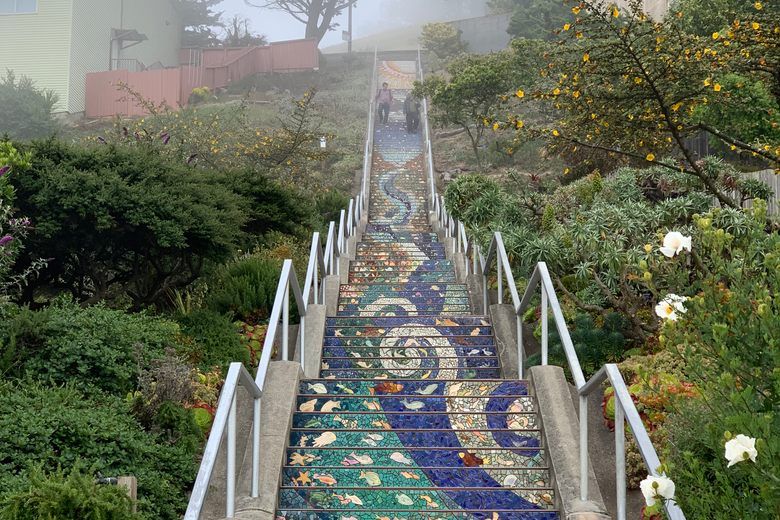
Secret Tiled Staircase
San Francisco, California
This 163-step masterpiece transforms a standard neighborhood incline into a shimmering mosaic river that flows from the sea to the sun, doubling as a vital ecological corridor for rare local butterflies.